 CKreative EventsJournalPlan Your Event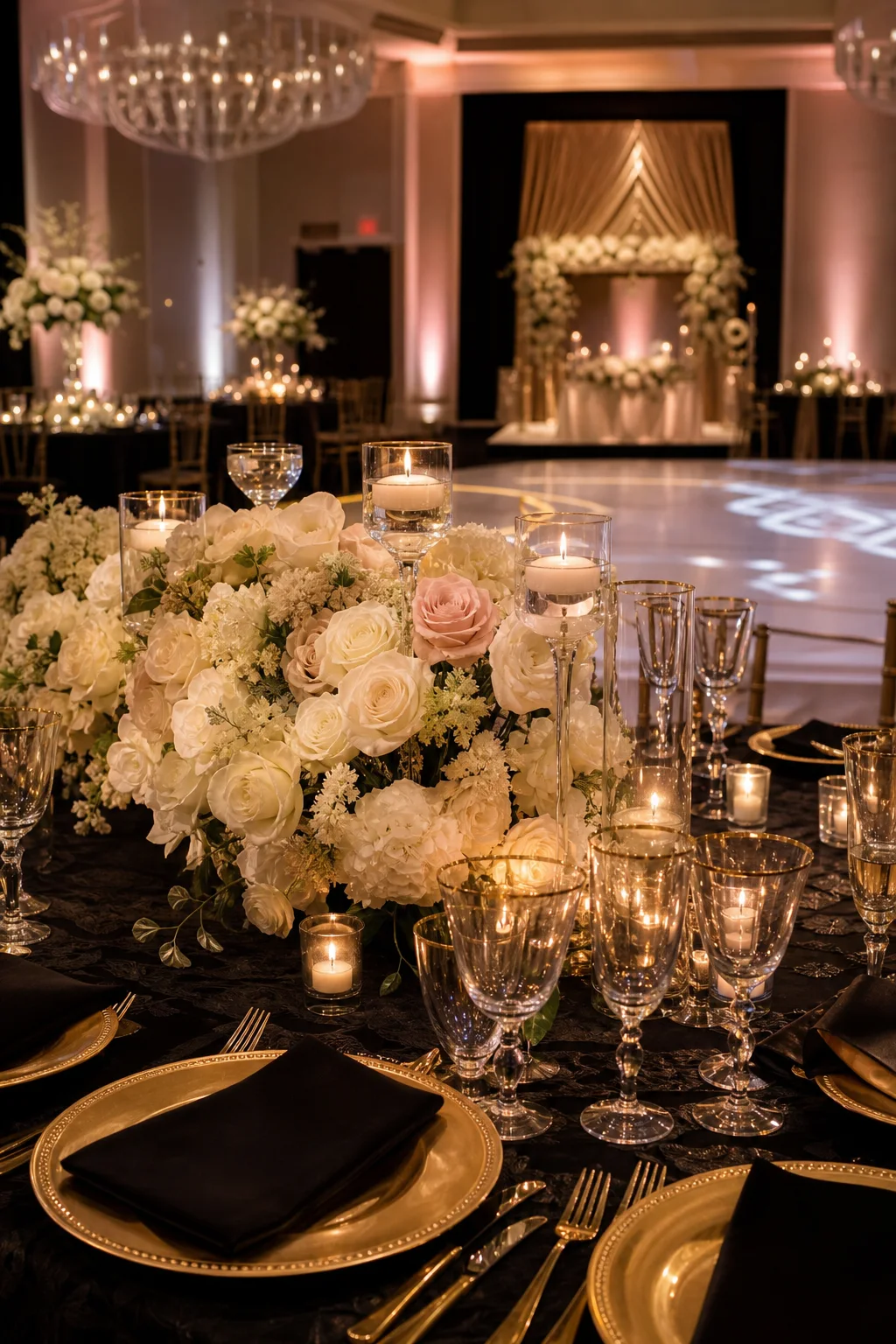
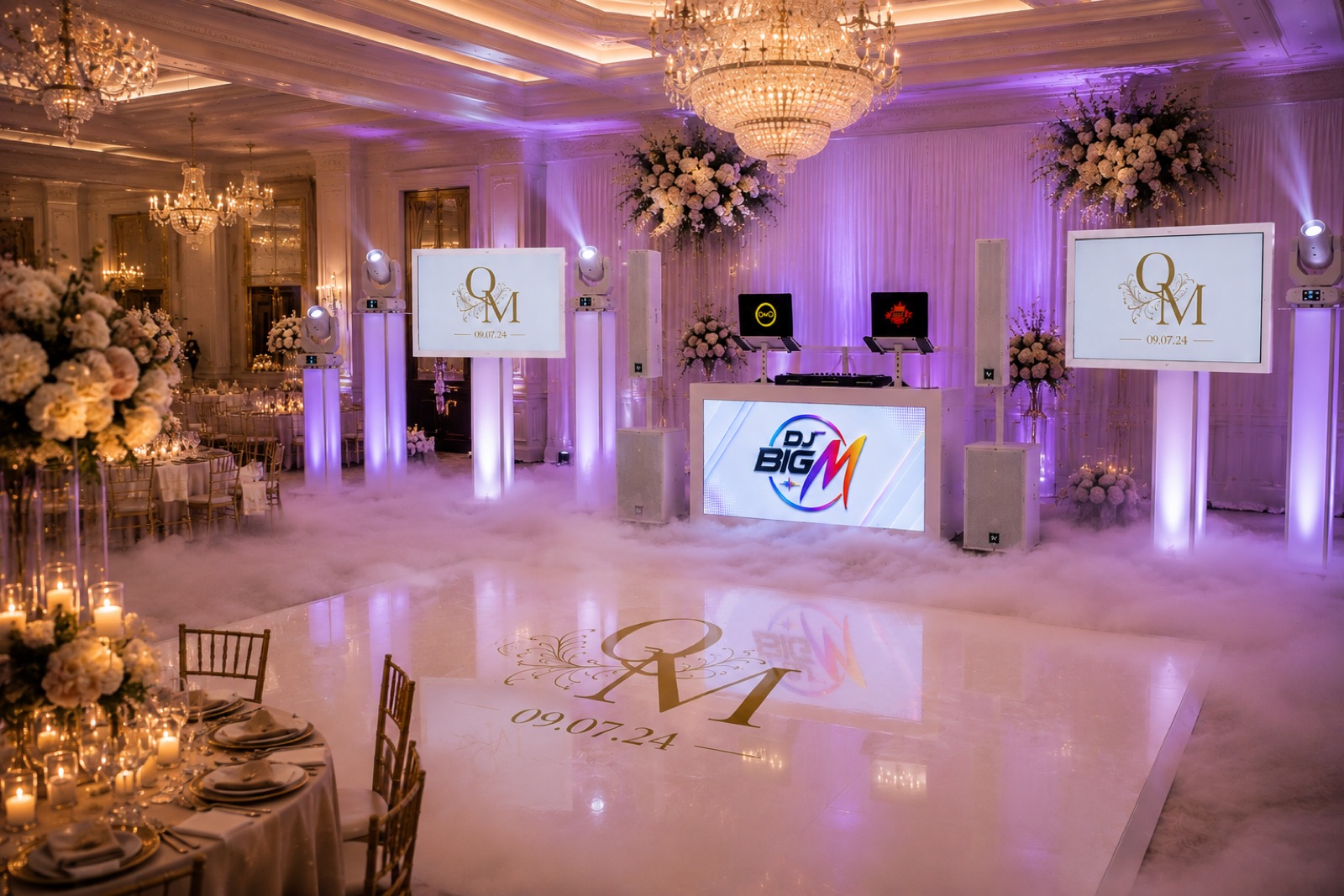
Wedding uplighting places light near walls, columns, or architectural features so color and brightness travel upward through the room. It can warm a neutral ballroom, reveal texture, define the dance floor, and help the reception feel intentional after daylight fades.
The right plan depends on the room. Fixture count matters, but it is not the first question. Wall color, spacing, windows, ceiling height, guest layout, existing venue lighting, and the desired atmosphere all influence the result.
Start with the surfaces that will receive the light.
Uplighting is most visible when it has a suitable surface to illuminate. Light-colored walls tend to reflect color clearly. Dark wood, heavy draping, mirrors, windows, and textured stone respond differently. A venue with architectural columns may need a different layout from an open room with long uninterrupted walls.
Ask for current venue photographs or arrange a walkthrough when possible. Pay attention to what will be behind the couple, the head table, the dance floor, and the areas that appear most often in photographs.
Choose color by feeling, not just by palette.
A color can match invitations perfectly and still feel wrong across an entire room. Consider skin tones, table linens, flowers, wall color, and photography in addition to the wedding palette.
Warm white and amber
Warm tones can make a room feel candlelit and welcoming. They pair naturally with ivory, greenery, gold details, and many neutral designs. They are also a useful choice when the goal is elegance without visibly colored walls.
Soft blush, rose, and muted color
Subtle color can complement floral and decor choices while preserving a refined atmosphere. Saturation matters: a gentle wash and a vivid color create very different photographs.
Deeper color for dancing
Some receptions begin with a restrained dinner atmosphere and transition into richer color when dancing starts. If changes are planned, they should feel deliberate and should not distract from formal moments.
Placement determines whether the room feels balanced.
Even spacing can create a polished perimeter, but perfect symmetry is not always necessary. Doors, service stations, curtains, columns, and guest pathways may interrupt the wall. Prioritize the visible areas and avoid placing fixtures where guests, children, or venue staff may trip over them.
Fixtures should also remain discreet in photographs. Cable management, battery life, floor clearance, and venue rules are part of the design even though they are not glamorous topics.
Coordinate uplighting with the venue's existing light.
Chandeliers, wall sconces, overhead fixtures, pin spots, daylight, candles, and dance-floor effects all contribute to the room. Uplighting should complement this system rather than fight it.
If the venue keeps bright overhead lighting on during dinner, delicate uplighting may appear less pronounced. Ask when house lights can dim, which controls are available, and whether the venue requires specific safety lighting throughout the event.
Protect the way people and decor look in photographs.
Lighting that looks dramatic to the eye may produce a different result in photographs and video. Highly saturated color across faces, the couple's table, or a ceremony backdrop can affect skin tones and the appearance of white clothing.
Use color on walls and architecture while preserving flattering light where people will stand. Share the lighting plan with the photographer or videographer when the design includes significant color changes or a very dark reception atmosphere.
How many uplights does a wedding need?
There is no responsible universal number. A compact room with columns may need more closely spaced fixtures, while a larger room with a few strong architectural features may look better with selective placement. The desired effect also matters:
- Accent lighting emphasizes selected features or focal points.
- Balanced perimeter lighting creates a consistent rhythm around the room.
- Immersive lighting uses broader coverage and may include programmed changes.
Provide the venue name, room dimensions if available, floor plan, guest count, and photographs. A lighting provider can then recommend coverage based on the actual space rather than a package number alone.
Questions to ask the venue and lighting provider.
- Does the venue allow uplighting, and are there placement restrictions?
- Which house lights can be dimmed and at what point in the reception?
- Are battery-powered fixtures preferred or required?
- How will cables and fixtures be protected in guest pathways?
- Can the color or brightness change between dinner and dancing?
- Which walls and architectural features will receive the light?
- Will setup be completed before photography and guest arrival?
The most elegant plan has a clear purpose.
Uplighting should not be added simply because it appears on a package list. Decide what you want it to accomplish: warm an austere room, reveal the architecture, connect the decor, distinguish the dance floor, or create a visual change after dinner.
When every lighting decision supports that purpose, the room feels designed rather than merely illuminated.
Design the atmosphere
Let the lighting respond to your venue and celebration.
CKreative Events provides event lighting and uplighting support for weddings, receptions, parties, and corporate events in Bristol and surrounding Connecticut communities.